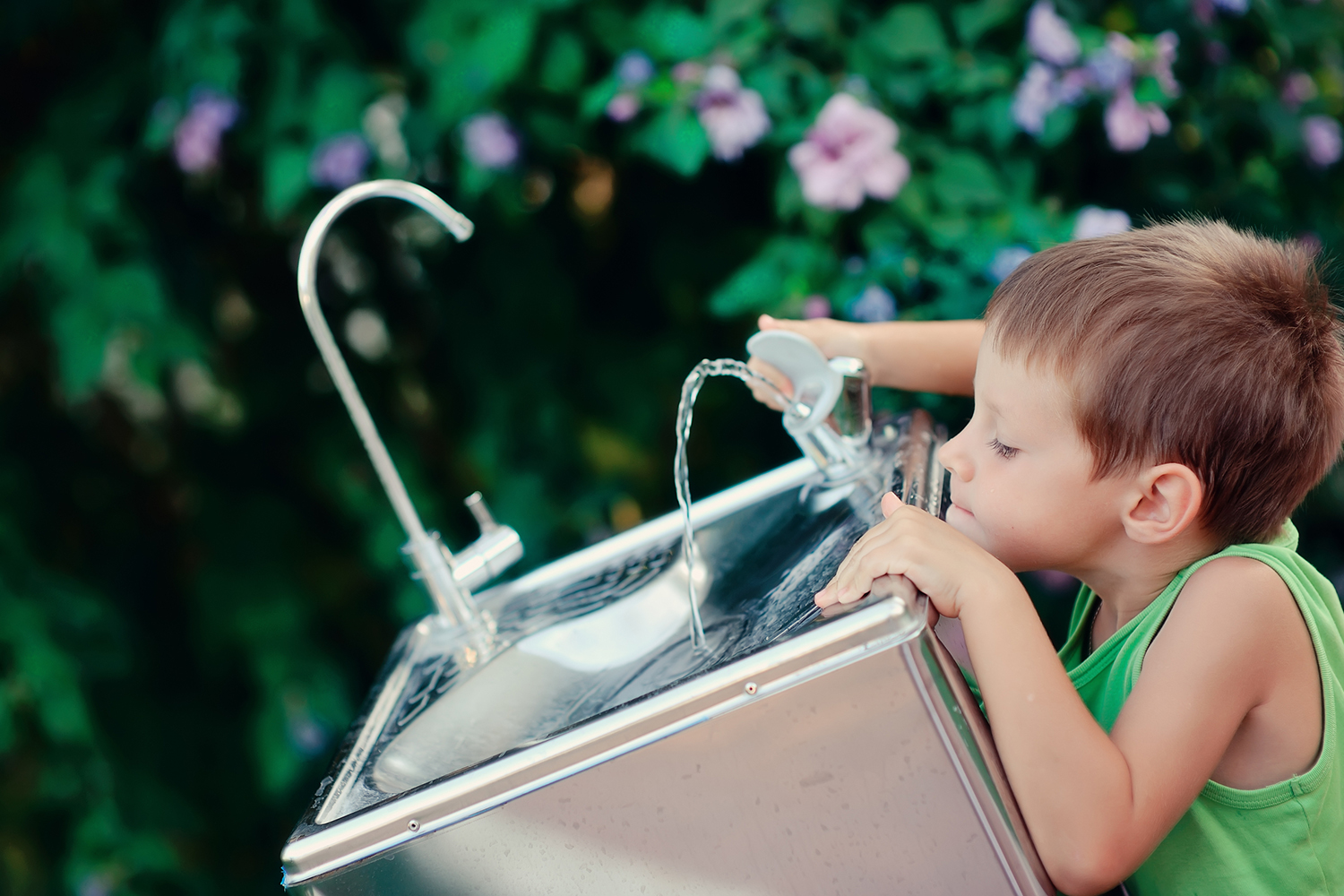
Playing outdoors is one of the joys of childhood. It’s so much fun, in fact, that kids often can’t be bothered to stop for a drink of water.
Keeping water handy, and encouraging kids to drink regularly, can help keep them hydrated and feeling their best.
Dehydration in Children
Children’s bodies don’t adjust as well to high temperatures as they will later in life, so the risk of dehydration, heat exhaustion, and heat stroke is greater for children.
The younger the child, the greater the risk. Very young children may not have the language skills to explain what’s causing them discomfort when they’re thirsty, and at that age they are not usually in control of whether they stay outside or go in.
Even older children and teens may become so involved in a game that they don’t realize how thirsty they have become.
Hot or humid weather and vigorous activity increase fluid needs, making regular water breaks particularly important.
Signs of Dehydration
Children aren’t likely to recognize the warning signs of dehydration—they’re too busy having fun. So it’s up to parents, coaches, and caregivers to monitor them and watch for the warning signs before trouble occurs.
Keep an eye out for:
- dry lips or a dry, sticky mouth
- thirst
- fewer bathroom breaks or wet diapers
- dark-colored urine
- fewer tears when crying
- dizziness or lightheadedness
- headache
- tiredness or unusual sleepiness
- muscle cramps
- irritability
Confusion, fainting, or severe weakness can signal a more serious heat-related illness and require prompt medical attention.
Treating Dehydration
-
Take Shelter
If you notice any symptoms of dehydration, take the child out of the sun and into a cool place as soon as possible.
-
Rehydrate
Encourage the child to sip cool water. For most everyday activity and play, water is the best hydration choice.
Dehydration caused by vomiting or diarrhea calls for a commercial oral rehydration solutions that can replace both fluids and electrolytes.
-
Skip Soda
Water is a better hydration choice than soda and other sugar-sweetened beverages. Avoid sugary drinks as well as beverages containing caffeine or other stimulants.
How Much Water Do Kids Need?
New expert recommendations for children and teens ages 5 to 18 suggest these daily ranges for plain drinking water:
- Ages 5-8: 16-40 ounces (2-5 cups)
- Ages 9-13: 22-61 ounces (roughly 2.75 - 7.5 cups)
- Ages 14-18: 29-88 ounces (3.5 to 11 cups)
When to Hydrate, and How Much to Drink
Heat-induced illness is preventable, says the American Academy of Pediatrics (AAP).
Children should drink plenty of fluids before, during, and after playing or exercising.
- For most periods of time under an hour, water is usually sufficient.
- If children are playing or exercising for longer, especially in hot and humid weather, try an electrolyte drink like a low-sugar sports drink or electrolyte tablet added to water.
One DIY electrolyte option is a chilled serving of coconut water.
Other Tips for Staying Cool
-
Beat the Sun and Heat
Have children practice sports early in the day, before the heat builds, or later, when it’s cooler.
-
Dress Lightly
Dress them in lightweight, light-colored clothing.
-
Get Acclimated
Young athletes should acclimate to the heat over the course of two weeks by engaging in workouts that slowly increase in intensity and duration.
For sports that require bulky equipment, children should practice in light clothing for several days to get acclimated, and avoid heavy gear on hot days.
-
Drink Up!
On hot days, children engaged in sports need a drink about every 20 minutes.
The AAP recommends at least 5 ounces for those under 90 pounds and 9 ounces for those weighing more than 130 pounds. (One ounce equals approximately two kid-size gulps.)