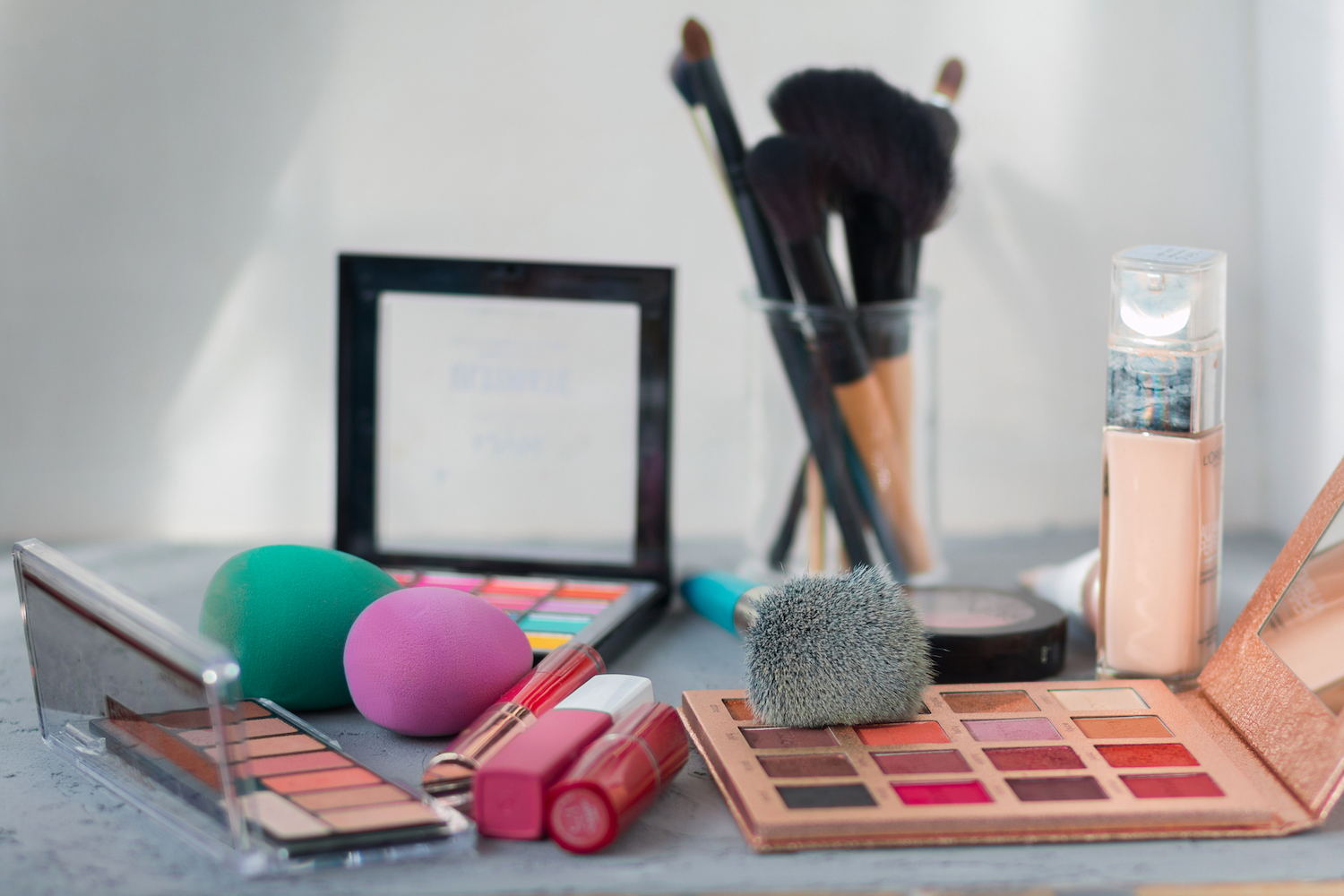
If you use makeup, a recent study may give you pause. Researchers tested cosmetics bought from Ulta Beauty, Target, Sephora, and Bed, Bath & Beyond and found that many contained per-and polyfluoroalkyl substances (PFAS), some of which have been associated with serious health concerns such as cancer and obesity. Eighty-two percent of the waterproof mascaras contained PFAS, 63 percent of the foundations, and 62 percent of the liquid lipsticks.
PFAS have been used commercially since the 1940s to "coat" things. Think cookware (Teflon) firefighting foams, food packaging, raincoats, and carpets. Many people are not aware that these chemicals are also used to increase spreadability in cosmetics and to make them more waterproof.
But it's not just PFAS you need to worry about. More than 80,000 ingredients are used in personal care products. About one in eight of these ingredients is an industrial chemical linked with terms like “carcinogen” or “reproductive toxin.”That’s enough to make you think twice about what goes on your skin. It also leads to questions about the cumulative effects that everyday beauty habits have on the environment.
You may already know about the Environmental Working Group’s Dirty Dozen. The Canadian nonprofit David Suzuki Foundation has prepared a list of 12 cosmetic chemicals to avoid. This is helpful as the cosmetics industry continues to work toward standards similar to those guaranteed by organic (food) certification.
Here’s a summary of the foundation’s “dirty dozen” in personal care products:
1. Chemical preservatives BHA and BHT
2. Coal tar–derived colors, which may be listed with the phrase FD&C
3. DEA (diethanolamine) and related ingredients, chemicals that create creaminess or suds
4. Dibutyl phthalate, found in some nail polishes
5. Formaldehyde-releasing preservatives such as DMDM hydantoin, diazolidinyl urea, and imidazolidinyl urea
6. Parabens, hormone-disruptive preservatives
7. Fragrance, or parfum, an unregulated and often unlabeled blend of manmade scents
8. Petroleum-derived PEG compounds, often used as a base for cosmetic creams
9. Petrolatum, also called petroleum jelly or mineral oil jelly
10. Silicone-based siloxanes, used in cosmetics to soften and smooth
11. Foam-producing sodium laureth sulfate
12. Antibacterial agent triclosan