Sixty thousand miles—that’s the length of your vascular system. What a journey for your blood! Make it a healthy one.
Your heart pumps blood to your lungs for oxygen, then into your arteries carrying it down to your feet. Calf-muscle contractions push the blood toward your heart, while valves in your calf veins prevent backflow. If valves are weakened or damaged, blood pools in your calf veins, leading to chronic venous insufficiency (CVI).
Although CVI is irreversible, you can manage and treat it, and maybe even prevent it altogether.
Causes of Chronic Venous Insufficiency
CVI can take years to progress without you knowing, as pressure gradually builds in your leg veins. This happens from prolonged standing or sitting, limited exercise, obesity, pregnancy, or a leg injury or surgery. Smoking can damage veins, which also can weaken with age. Or CVI could run in the family.
“The condition can affect one or both legs. Swelling of the calves and feet is the most common symptom. Second is varicose veins, bulging and twisted veins. With severe insufficiency, skin changes can develop and a wound from an injury in that area may not heal well because of poor blood flow,” says Dr. Lai Chim Chan, ND, associate professor at the National University of Natural Medicine, in Portland, Oregon.
Take Action Against CVI
See your healthcare provider as soon as you notice symptoms. “Mimics include diabetes, heart or kidney problems, hypothyroidism, or lymphedema,” says Chan. “If your legs feel heavy, a venous duplex ultrasound shows how leaky your valves are. Laser treatment for them and/or medicine injected into your veins could help.”
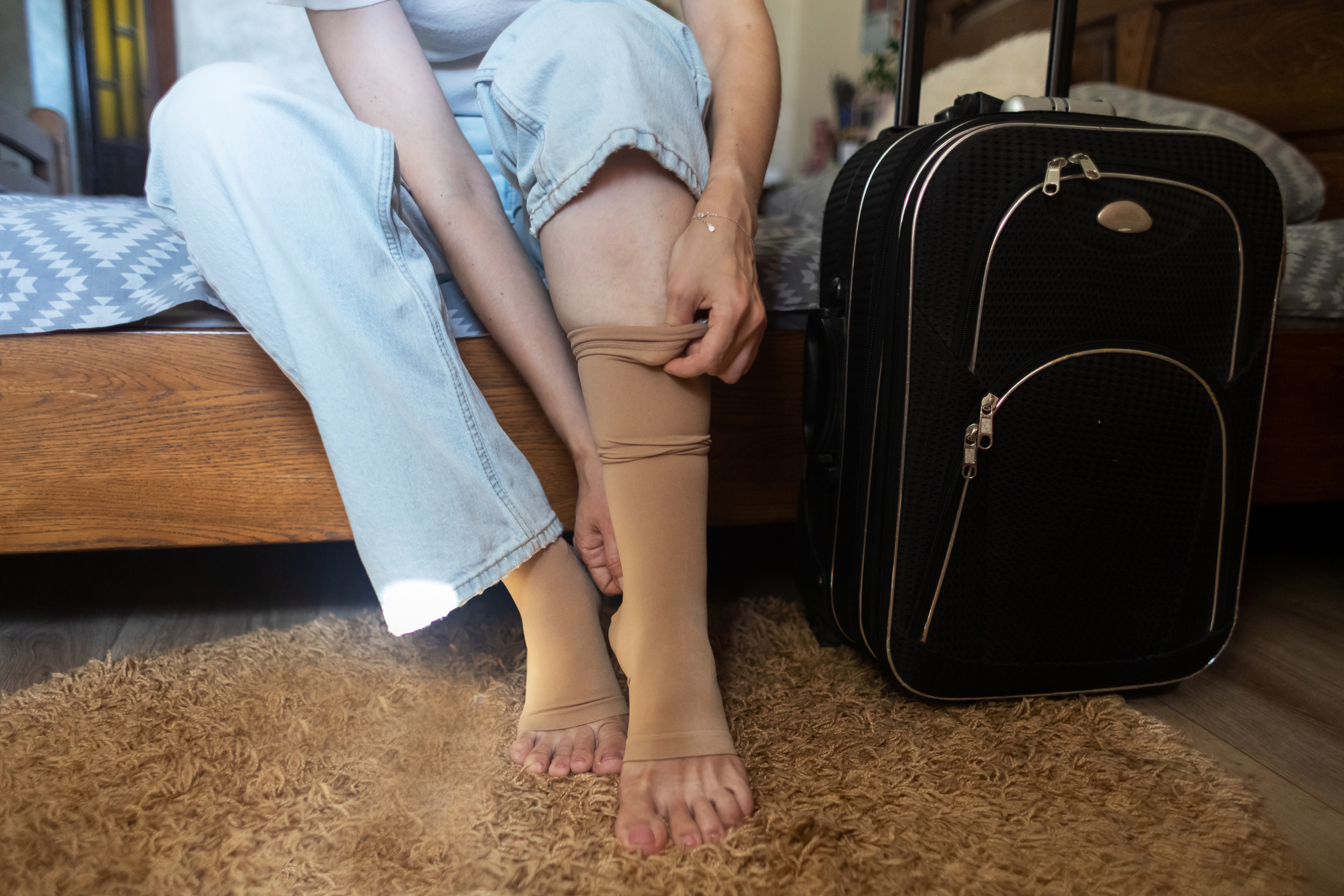
Most likely you can manage—and prevent—CVI with regular exercise that strengthens calf muscles, such as walking uphill or briskly. Compression socks can improve blood flow and reduce swelling, so wear them if you’ll be sitting or standing for a while (your doctor may prescribe them for all-day wear). And take breaks to move your legs and elevate them above your heart.
Drink plenty of water and eat anti-inflammatory foods, including those with flavonoids found in many colorful fruits and vegetables, such as blueberries, red cabbage, and kale.
Supplements for CVI
Chan suggests these herbal extracts for CVI: horse chestnut (Aesculus hippocastanum L.), butcher’s broom (Ruscus aculeatus), French maritime pine bark (Pycnogenol) and grapeseed (Vitis vinifara). Then there’s gotu kola (Centella asiatica). “Consult with your doctor for the right herbs and doses for you,” she urges.
It’s never in vain to care for your veins, CVI or not. A healthy vascular system assures a happy heart.