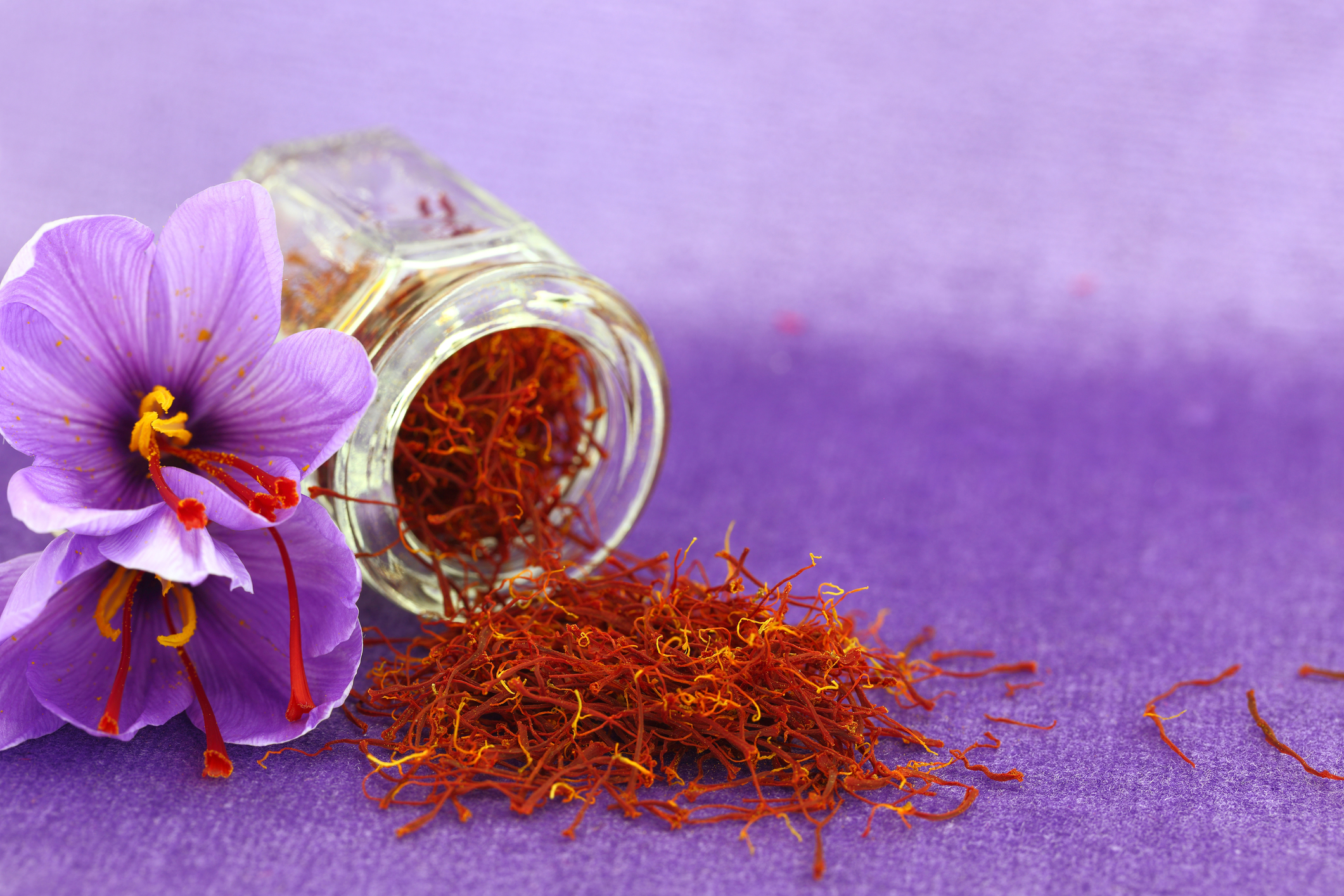
Exotic, expensive, and with a rich and storied past, saffron has moved beyond the kitchen and into the world of supplements. Known as “red gold” or “the golden spice,” saffron consists of the dried, bright red stigmas of the purple-flowering crocus, Crocus sativus.
Since each thread of saffron is harvested by hand, and each flower produces only three stigmas (the red threads), it’s easy to see why this is such a costly spice. In fact, saffron is often compared to gold in expense, though it’s a bit cheaper.
The History of Saffron
Cultivated for thousands of years, most of the world’s saffron supply originates from Iran, with additional cultivation in Afghanistan, India (Kashmir), Spain, Greece, and Morocco.
Historically, saffron has been used to dye clothing, flavor food, and enhance cosmetics and perfumes. It’s believed that Cleopatra soaked in saffron-infused baths to boost her beauty. Alexander the Great supposedly used it for bathing, too, but beauty wasn’t his goal. His aim with saffron was to cure his battle wounds.
While we may not use saffron for war injuries today, this intriguing spice is helping individuals with a variety of health concerns and conditions.
Research Highlights on Saffron
More than 100 biologically active compounds have been identified in saffron. Key bioactives include crocetin, crocin, safranal, and picrocrocin. Early research suggests these phytochemicals may support healthier sexual functioning, cognitive ability, and stress response.
Brain, Mood, and Nervous System Support
Saffron’s bioactive compounds may support emotional well-being and cognitive functioning, while also offering antioxidant and anti-inflammatory effects. Known as both a nootropic and a nervine, saffron provides support for brain and nervous system health.
Sleep and Safety
Randomized, double-blind trials suggest saffron extract may improve sleep quality in the short term. More research is needed to determine efficacy and long-term safety.
In terms of safety, saffron is generally well tolerated at typical supplement doses (15–30 milligrams/day).
Premenstrual Support
Saffron may help reduce certain premenstrual symptoms, such as irritability, food cravings, and fatigue. Along with black cohosh and chaste tree/vitex, saffron may be a good option for those seeking natural relief.
Eye Health
Some studies suggest saffron extract may support visual function in people with age-related macular degeneration. It’s thought that saffron’s eye-supportive benefits are related to its antioxidant activity, which may help protect retinal cells from oxidative stress damage.
Metabolic and Cardiovascular Markers
Research suggests saffron extracts may help support healthy glucose regulation and a balanced inflammatory response. Saffron contains crocetin, a component with anti-inflammatory abilities that boosts blood flow as well as possibly improving heart health.
Mood and Cognitive Research
Known as the “sunshine spice” for its brilliant color, saffron has been studied for its potential effects on mood. When 30 mg saffron extract was taken dailyversus a placebo over eight weeks, a significant reduction in stress response was noted among participants.
Subjects in another study reported reduced depression scores when taking a 30 mg saffron extract. Learn more about how saffron can help with mood and binge eating.
For improved cognitive functioning in those with Alzheimer’s disease, 30 mg/day of saffron stigma extract was given for a 4- to 12-week period. Results showed similar or equal efficacy when compared with subjects who were given medications that enhanced cognition. Due to saffron’s high antioxidant content, it may offer a role in the prevention and management of Alzheimer’s disease by inhibiting amyloid plaques from building up in the brain.
Supplement Use and Safety
Typical saffron supplements saffron provide about 15-30 mg of extract per day, a range commonly used in clinical studies. It’s best not to exceed that amount per day. Check with a healthcare professional to learn if saffron supplementation is right for you.
Acute toxicity data suggest that saffron, safranal, and crocin have low toxicity at typical doses. Standard doses in clinical trials range from 15-30 mg a day, with some trials exploring doses up to 50 mg per day under controlled conditions.
Side effects are uncommon at standard doses but may occur with excessive intake. These include numbness, yellowing of the skin and eyes, nausea, dizziness, vomiting, diarrhea, tingling in the hands and feet, bleeding disturbances, and headaches.
Pregnant women; those with bipolar disorder, low blood sugar, kidney disorders, or bleeding disorders; and those at risk of bleeding disorders should avoid taking saffron.
A Culinary Wonder
If you prefer your saffron to stay in the kitchen, try it in the warming beverage known as golden milk. Risottos, tomato-based stews, seafood dishes like paella and bouillabaisse, spinach, potatoes, soups, grains, dressings, marinades, rice, lassi, teas, and desserts such as rice puddings and custards are other tasty ways to enjoy saffron.
Use less saffron than you think (about three threads per person) and avoid burning the delicate strands when heating them. To prevent scorching, add saffron to a liquid (broth, milk, water) before heating. Soaking’s the best way to preserve saffron’s vibrant color and fragrance.
The flavor of saffron is earthy, warm, and slightly sweet. Fortunately, only a little of this expensive spice is needed to enhance food. And because it’s one of the few water-soluble spices, you can enjoy it simply by steeping a few threads in hot water. Allow time for the threads to soak and then sip the water.
Be careful handing saffron. Due to its vivid color, it can stain clothes and certain types of countertops.
Since it’s such an expensive spice, saffron can sometimes be adulterated with other plant material or artificial coloring to dupe consumers. Look for the ISO 3632 standard, which evaluates chemical markers such as crocin and safranal content.