
Edible Flowers

Feast on flowers to make meals special.

By Lisa Fabian

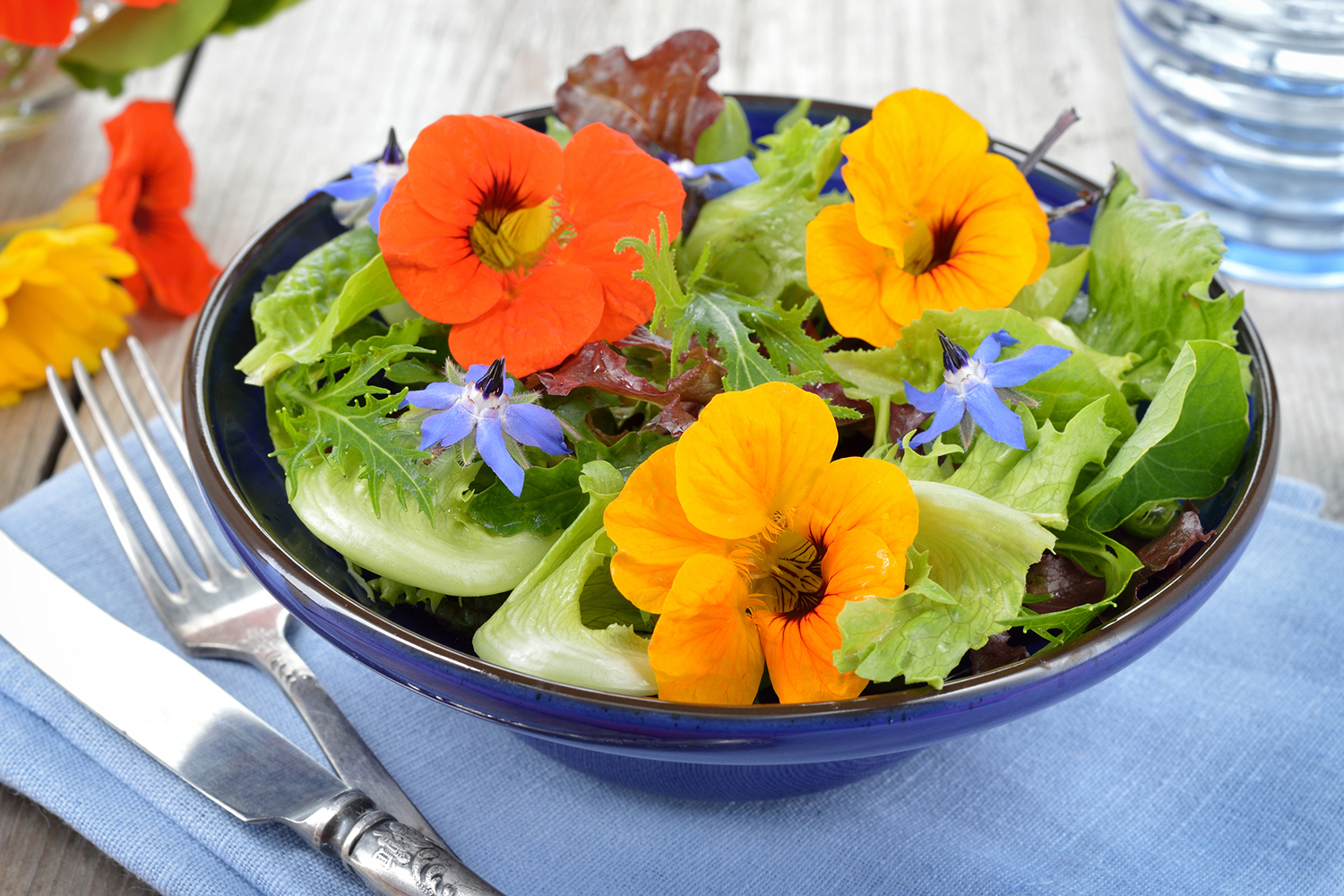
Edible gardens grace us with their bounties of vegetables, fruits, and herbs. But there are other colorful contenders vying for attention on your plate: edible flowers.

These beauties add flavor, texture, and color to a dish, helping to brighten one’s mood and bringing a welcome change to mostly green salads.

Edible flowers can be good for you too, as they offer antioxidant properties and anti-inflammatory compounds. Stems, leaves, and petals may all contain nutritional benefits. 

In ancient times, flowers were grown more for their fragrances and flavors than appearances. These days, what’s old is new, as adventurous chefs and home cooks look to dress their dishes with flavorful and edible blooms.

Common Questions

  • Are Edible Flowers Safe to Eat?

    • Identification

      Identifying which flower varieties are edible is a crucial skill. Never consume a flower until you are entirely sure what it is.

    • Food Safety

      Never eat flowers treated with pesticides or fungicides, or those that have been mass cultivated.

  • Where Do I Find Edible Flowers?

    • Grow Your Own

      If you have your own garden, it may be best to source edible flowers there. They can also be grown in flowerbeds, window boxes, or pots.

      • Pick them first thing in the morning when they look and taste their freshest.
      • Carefully rinse and let dry on a clean towel.
    • Find a Specialist

      You can also buy them locally or online from a source that specializes in edible versions.

  • How Do You Use Edible Flowers?

    Garnish a plate with edible flowers right before serving. If you use these blooms to top cakes and other baked goods, they’ll look presentable for about two days.

    • Edible flowers are best used as garnishes for lighter dishes.
    • Recipes that are saucy, juicy, or warm tend not to pair well with delicate blooms.
    • Petals generally offer better flavors than other parts of the plants.

Our Favorite Edible Flowers

Now on to the stars of the show!

Here’s how to make your plates sing with the following edible blooms.

  • Bachelor’s Buttons

    In pink, purple, and blue hues, these flowers are also known as cornflowers. They have a slightly sweet taste.

    • Add to salads, smoothies, and herbal tea blends.
  • Borage

    These flowers have a taste similar to that of cucumber, and a delightful blue color.

    • They make beautiful garnishes for summer drinks, or on top of salads and soups.
    • Consider freezing into ice cubes, and then add to beverages for delightful summer sippers.
  • Calendula

    Calendula is zesty, with a piquant flavor.

    • Add to rice dishes, stir fries, pastas, and salads.
    • This flower can be used in place of saffron.
  • Chrysanthemum

    Some are mild, some are sweet, and some are hot and peppery. Take a taste of your variety to see where it can best make an appearance.

  • Daisies

    • Add the miniature variety to salads or sandwiches.
  • Dandelions

    Categorized by many to be a weed, this common plant is actually very healthy and useful to humans.

    Dandelion leaves and the green ends of the flowers are bitter. The petals and stamen are mildly sweet.

    • Fry the flowers or flower buds as fritters.
    • The flowers can also be transformed into wines and jellies.
    • Steam the leaves for a few minutes and serve as a side dish.
  • Daylilies

    Popular in Asian culture, daylilies are completely edible.

    • Boil the tubers as you would potatoes.
    • Sprinkle the bright petals into salads.
  • Lavender

    With an intense fragrance and flavor, this purple bloom is best used in moderation.

    • Add to scones, cakes, cookies, ice cream, and lemonade.
  • Marigolds

    With zing and a citrus-like flavor, the French variety is edible (the African version is not).

    Marigolds’ feathery leaves often taste of tarragon.

    • Add to salads.
  • Nasturtiums

    With a peppery taste similar to that of arugula, these blooms add a burst of color to a plate.

    • Garnish a salad with them.
    • Pickle the seeds for a caper substitute.
  • Pansies

    Tasting much like mild lettuce, this flower most often finds its way onto salads. Coming in many colors, pansies add complementary shades to a multitude of foods.

    • Use them to top cupcakes.
    • Freeze them into ice cubes to elevate beverages.
  • Roses

    The more fragrant the rose, the more flavor it has.

    • Often used in Middle Eastern cuisine in the delight known as rose water.
    • Rose petals can also be used to garnish puddings, sweet treats, teas, and rice pilafs.
    • Rose hips can be made into syrups.
  • Sunflowers

    Their seeds are a popular salad and trail mix addition, but the petals can be eaten too.

    • Harvest the unopened buds, remove the sepals, and steam as you would artichokes.
  • Tulips

    • Their smooth, large petals can be used as scoops for desserts and ice cream.
    • Or use them as a colorful platter for sweet canapés.
  • Violets

    With an almost sweet flavor, this mild bloom is perfect tucked inside sandwiches.

    • This flower also looks beautiful on top a salad.
    • For an elegant garnish, sugared violets can be sprinkled over cakes.

“7 delicious ways to eat flowers” by Ali Francis, www.BonAppetit.com, 5/30/17

“15 pretty edible flowers for decorating your dinner plates” by Arricca Elin SanSone and Janece Maze, www.CountryLiving.com, 4/25/23

“30 edible flowers you can eat right out of your garden” by Elizabeth Waddington, www.RuralSprout.com, 1/24/20

“Growing edible flower in your garden” by Margaret Boyles, The Old Farmer’s Almanac, https://cdn.almanac.com, 2024

Contributor

Lisa Fabian

Contributing Editor

Lisa Fabian is an award-winning freelance writer with more than 25 years of experience in the publishing industry. She's enjoyed covering topics as diverse as arts and crafts, boating, food, and health and wellness.

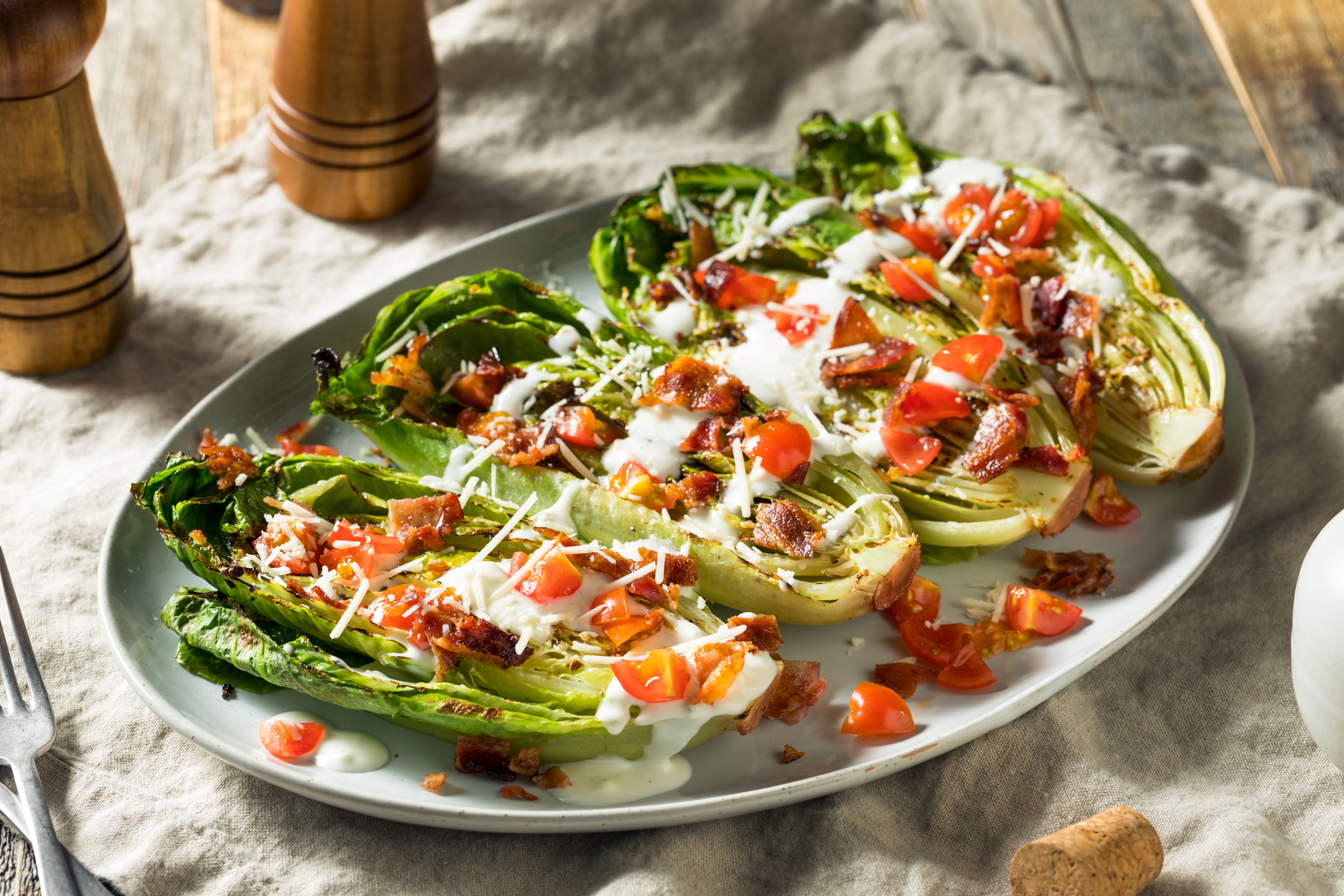
Grilled Romaine

with Bacon, Tomatoes, and Parmesan Cheese

By The Taste for Life Test Kitchen
Prep Time
25 minutes, plus bacon cook time
Number of Servings
Serves 4
Ingredients
  • 2 romaine lettuce hearts
  • Olive oil
  • 1 cup chopped cherry tomatoes
  • 1 cup chopped cooked bacon
  • 12 cup blue cheese dressing
  • 14 cup shredded Parmesan cheese
Directions
  1. Cut each romaine lettuce heart in half lengthwise.
  2. Heat grill. Oil grates lightly with olive oil.
  3. When grill is hot, place romaine halves flat-side down on grill. Grill for about 2 to 3 minutes, until lettuce has begun to wilt and grill marks begin to appear. Flip and grill for another 2 minutes.
  4. Place a romaine half on each of 4 plates. Divide tomatoes, bacon, dressing, and cheese over each romaine half. Serve immediately.
Nutrition Info
323 Calories, 10 g Protein, 35 mg Cholesterol, 7 g Carbohydrates, 4 g Total sugars (0 g Added sugars), 3 g Fiber, 29 g Total fat (8 g sat), 530 mg Sodium, ★★★★★ Vitamin A, Vitamin K, ★★★★ Folate, ★★ Phosphorus, Vitamin B1 (thiamine), Vitamin B2 (riboflavin), Vitamin B3 (niacin), Vitamin B6, Vitamin B12, Vitamin C, Vitamin E, Calcium, Potassium
Contributor

The Taste for Life Test Kitchen

The Taste for Life staffers have a wide variety of backgrounds and dietary needs. We're always experimenting in the kitchen, and love to share what we cook—and what we learn in the process.

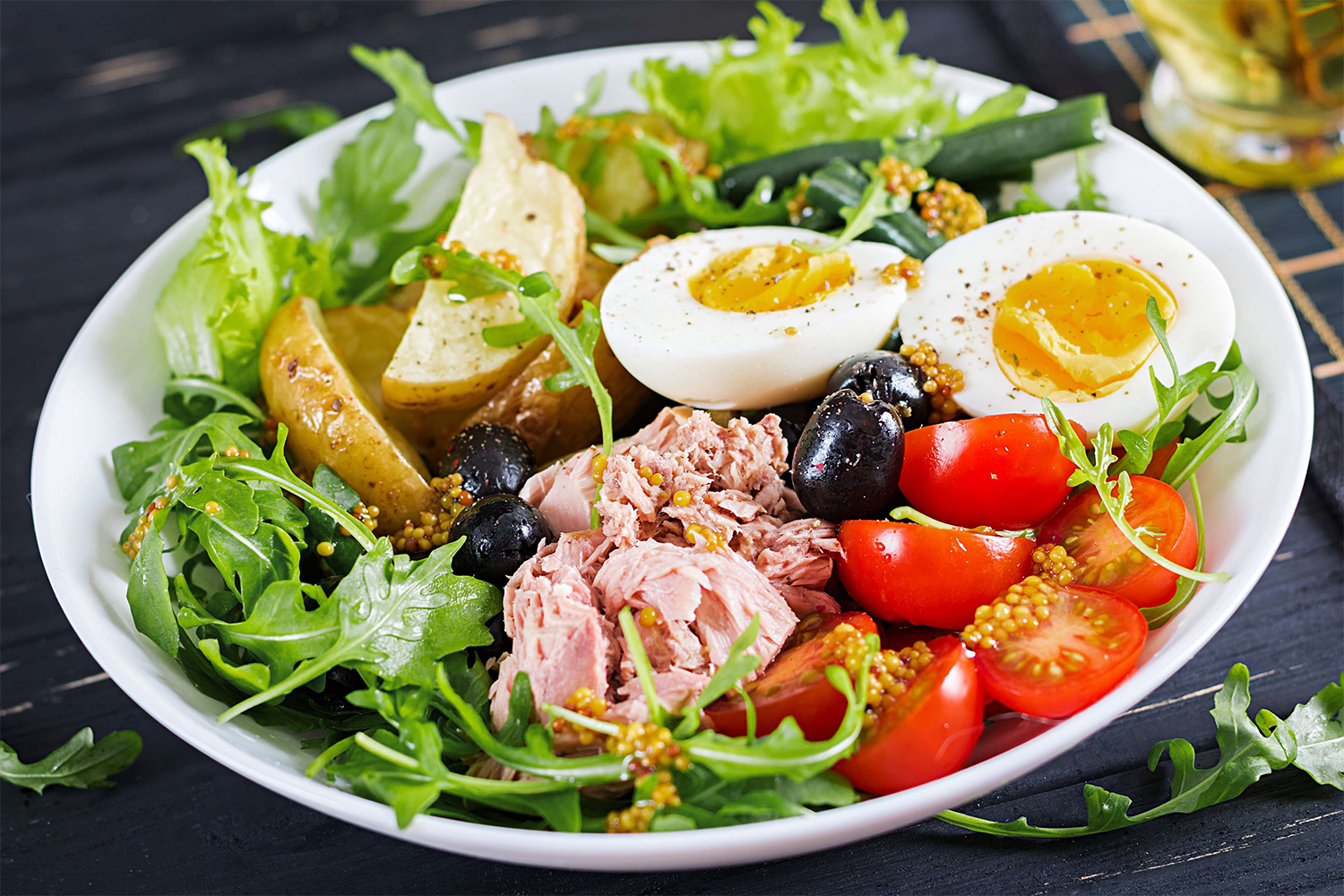
Chef’s Salad

By The Taste for Life Test Kitchen
a salad of greens with eggs, cherry tomatoes, potatoes, and ham
Photo by MariaPolna form PxHere
Prep Time
15 minutes
Number of Servings
Serves 4
Ingredients
  • 8 cups organic salad greens
  • 1 cup all-natural sliced ham
  • 2 small potatoes, boiled and quartered
  • 2 hard-boiled eggs, peeled and sliced
  • 1 avocado, peeled and sliced
  • 1 cup cherry tomatoes, halved
  • 18 cup pitted, sliced black olives
  • 34 cup low-fat Ranch salad dressing 
  • Freshly ground black pepper
Directions
  1. Wash and dry salad greens. Place them in a large bowl.
  2. Gently toss in the ham, potatoes, eggs, avocado, tomatoes, and olives.
  3. Drizzle with salad dressing. Sprinkle black pepper over and serve.
Nutrition Info
376 Calories, 18 g Protein, 121 mg Cholesterol, 35 g Carbohydrates, 7 g Total sugars (0 g Added sugars), 7 g Fiber, 18 g Total fat (5 g sat), 1,013 mg Sodium, ★★★★★ Vitamin B6, Vitamin K, ★★★★ Vitamin B1 (thiamine), ★★★ Vitamin A, Vitamin B3 (niacin), Vitamin B12, Vitamin C, Phosphorus, ★★ Vitamin B2 (riboflavin), Folate, Potassium, Zinc, Vitamin E, Calcium, Iron, Magnesium
Contributor

The Taste for Life Test Kitchen

The Taste for Life staffers have a wide variety of backgrounds and dietary needs. We're always experimenting in the kitchen, and love to share what we cook—and what we learn in the process.

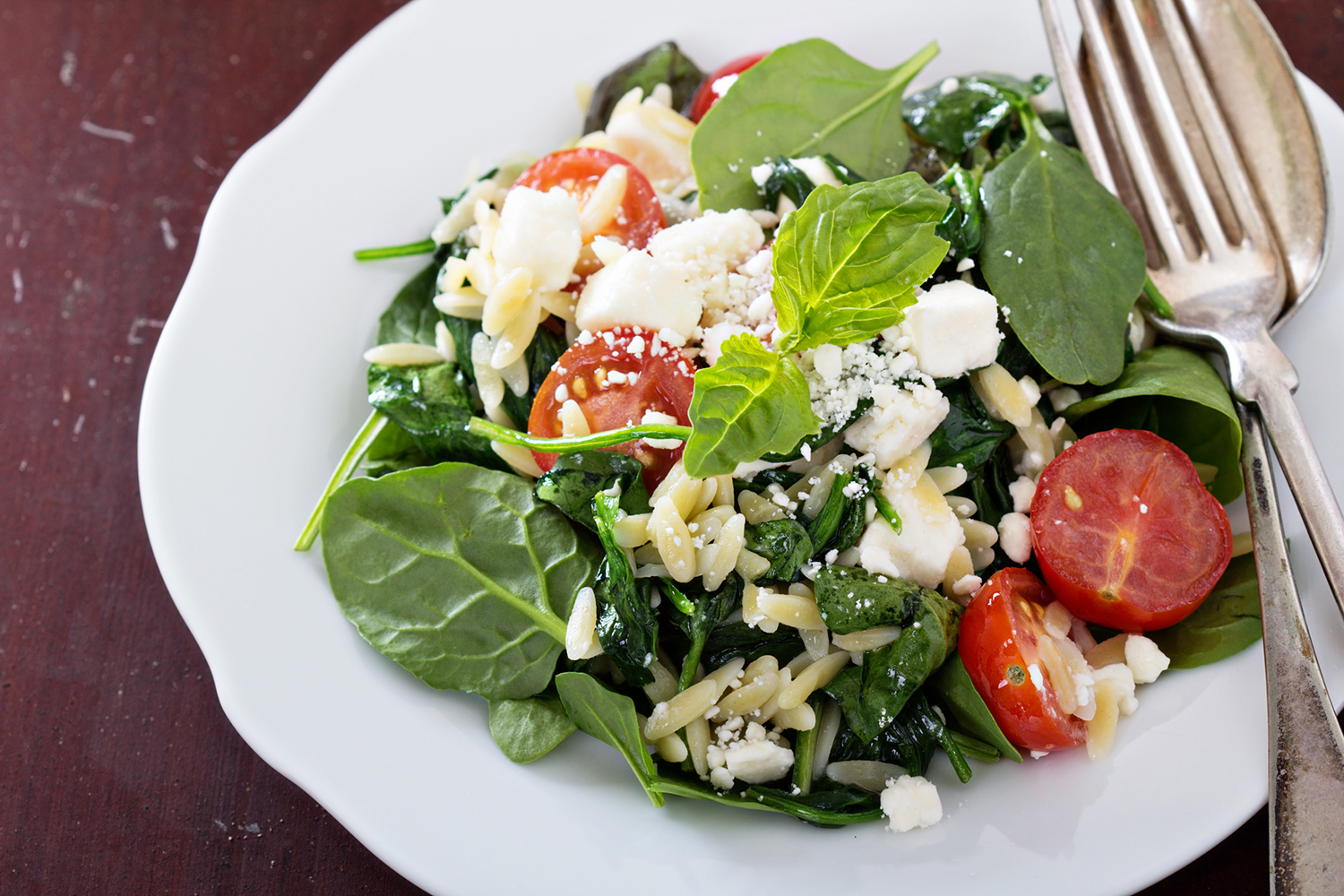
Spinach Salad with Vegan Feta and Garlic-Balsamic Vinaigrette

By The Taste for Life Test Kitchen
Prep Time
20 minutes
Number of Servings
Serves 4
Ingredients
  • Garlic-Balsamic Vinaigrette

    • 3 garlic cloves, minced
    • 14 cup balsamic vinegar
    • 1 Tbsp red wine vinegar
    • 2 tsp agave nectar
    • 2 tsp Dijon mustard
    • 12 cup extra-virgin olive oil
    • Salt and freshly ground black pepper
  • Spinach Salad

    • 1 lb baby spinach leaves, washed
    • 1 red bell pepper, seeded and thinly sliced
    • 1 red onion, thinly sliced
    • 14 cup fresh chopped mint
    • 12 cup crumbled vegan feta cheese
Directions
  1. Mix garlic, balsamic vinegar, red wine vinegar, agave nectar, and Dijon mustard together in a small bowl. Slowly whisk in oil until dressing emulsifies. Season to taste with salt and pepper.
  2. In a large salad bowl, toss together spinach, bell pepper, onion, and mint
  3. Transfer salad to 4 salad bowls. Drizzle dressing over bowls. Top with crumbled feta and serve.
Nutrition Info
389 Calories, 5 g Protein, 0 mg Cholesterol, 18 g Carbohydrates, 8 g Total sugars (3 g Added sugars), 5 g Fiber, 35 g Total fat (4 g sat), 610 mg Sodium, ★★★★★ Vitamin A, Vitamin C, Vitamin K, Folate, ★★★★ Vitamin E, ★★★ Vitamin B6, ★★ Vitamin B2 (riboflavin), Iron, Magnesium, Vitamin B1 (thiamine), Calcium, Phosphorus, Potassium
Contributor

The Taste for Life Test Kitchen

The Taste for Life staffers have a wide variety of backgrounds and dietary needs. We're always experimenting in the kitchen, and love to share what we cook—and what we learn in the process.

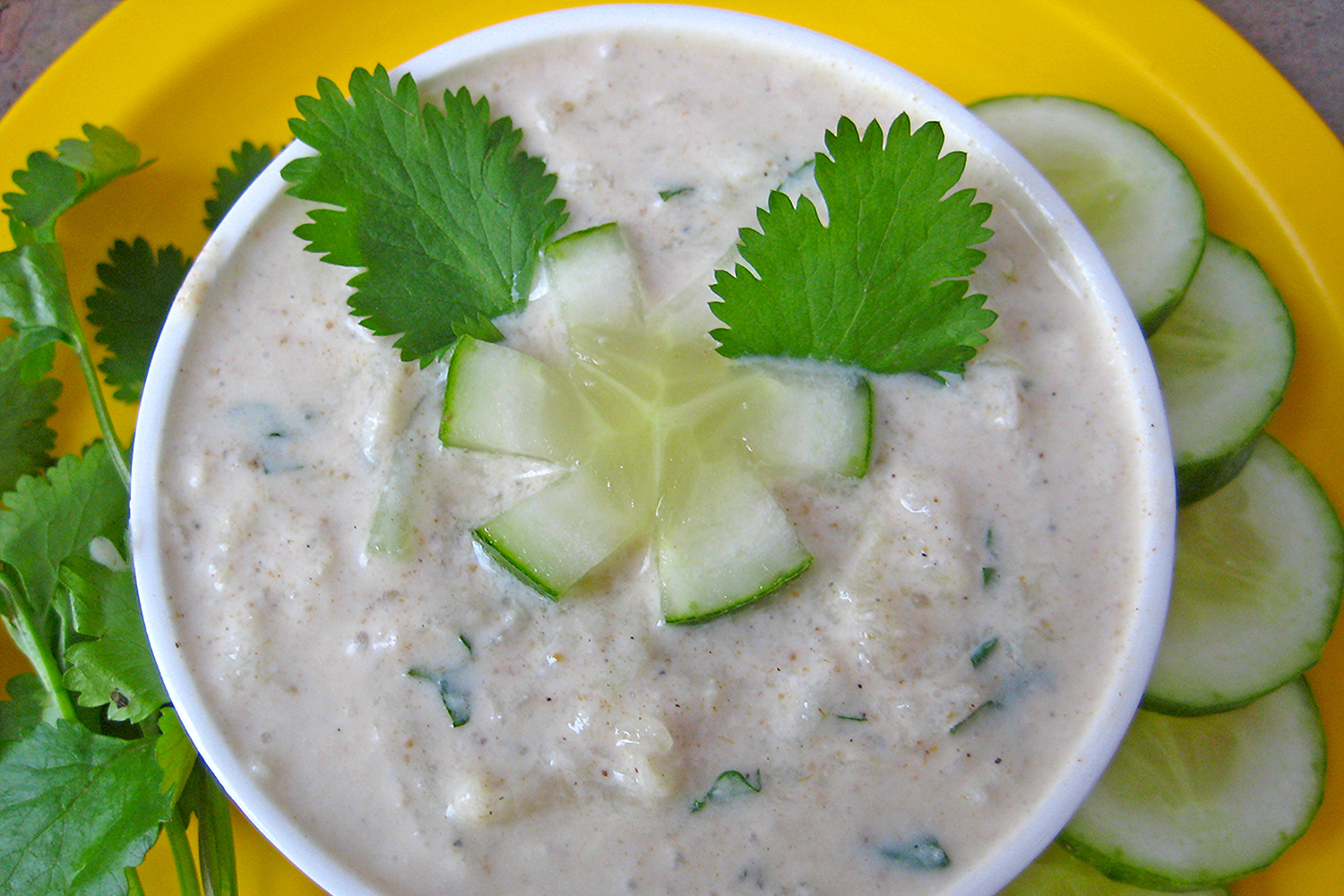
Cucumber and Mint Raita

A Cooling Indian Yogurt Salad

By The Taste for Life Test Kitchen
a bowl of Indian spiced yogurt with cucumber
Photo Sonia Goyal, Cucumber-raita, CC BY-SA 2.0
Prep Time
10 minutes
Number of Servings
Serves 6
Ingredients
  • 12 large cucumber, peeled
  • 1 34 cups plain whole-milk yogurt
  • 14 cup chopped fresh mint leaves
  • 12 tsp ground cumin
  • Salt
Nutrition Info
50 Calories, 3 g Protein, 5 g Carbohydrates, 0 g Fiber, 2 g Total fat (2 g sat), 229 mg Sodium, Vitamin B12, Calcium, Phosphorus
Contributor

The Taste for Life Test Kitchen

The Taste for Life staffers have a wide variety of backgrounds and dietary needs. We're always experimenting in the kitchen, and love to share what we cook—and what we learn in the process.

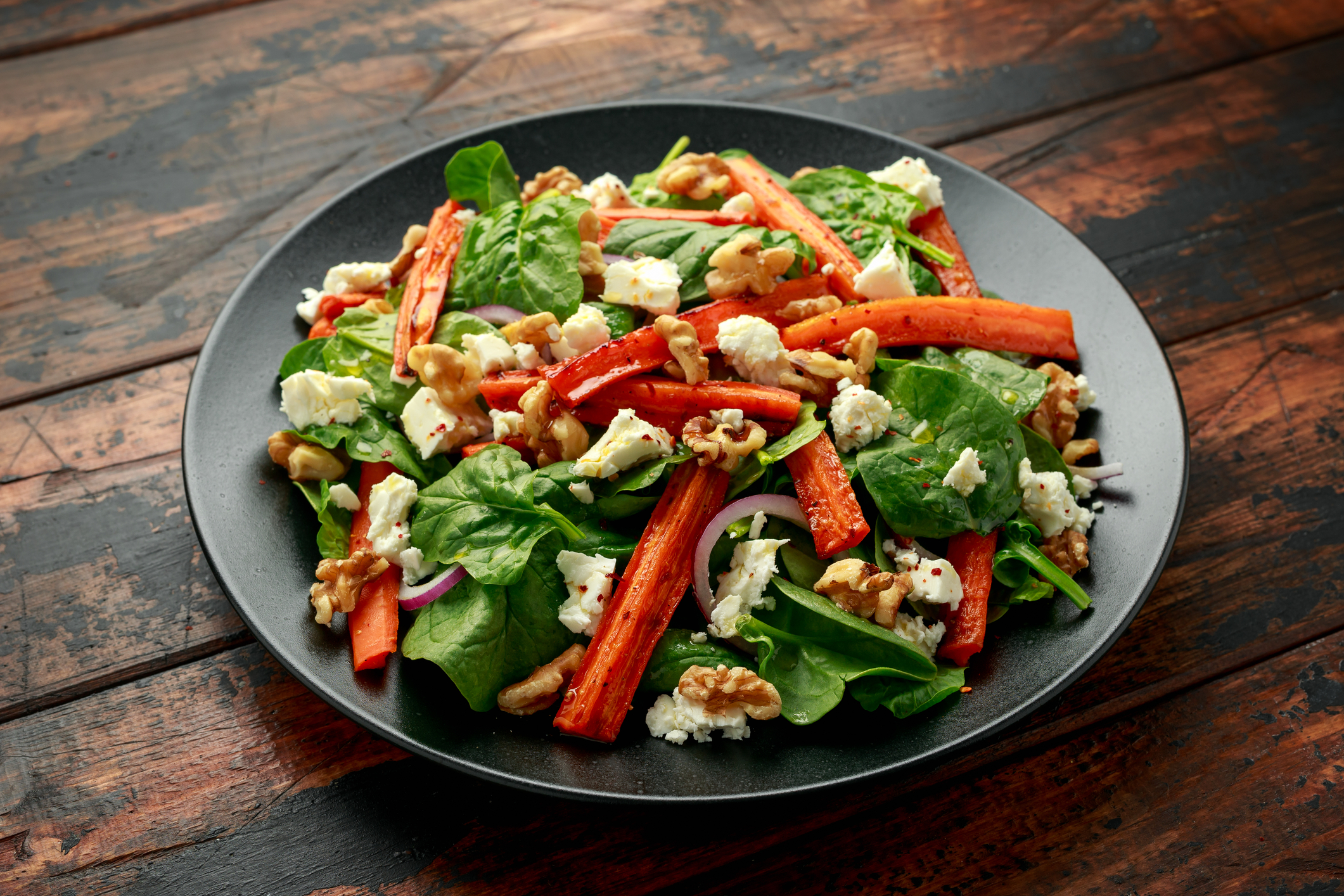
Spinach and Roasted Carrot Salad

with Goat Cheese and Walnuts

By The Taste for Life Test Kitchen
Prep Time
10 minutes
Number of Servings
Serves 6
Ingredients
  • 1 lb whole carrots
  • 1 Tbsp avocado oil
  • 12 cup chopped walnuts
  • 3 Tbsp extra-virgin olive oil
  • 3 Tbsp unseasoned rice vinegar
  • 1 tsp honey
  • 1 12 tsp Dijon mustard
  • 1 small shallot, thinly sliced
  • 6 oz baby spinach
  • 14 cup chopped fresh chives
  • 4 oz soft plain goat cheese, crumbled
Directions
  1. Place a baking sheet in the oven. Preheat oven to 425°.
  2. Peel carrots and then halve lengthwise. Cut into 2 12 by 12 inch long strips. Toss with avocado oil. Spread carrots on hot pan and roast until lightly brown and tender, approximately 13 to 15 minutes.
  3. While carrots are roasting, toast walnuts in a small, dry skillet over medium-high heat. Stir frequently, until walnuts are toasted, about 5 minutes. Set walnuts aside to cool.
  4. Whisk extra-virgin olive oil, vinegar, honey, mustard, and shallot together in a small bowl.
  5. In a large bowl, toss spinach, roasted carrots, chives, and dressing. Divide mixture among 6 plates. Top each plate with equal amounts of toasted walnuts and goat cheese. Serve.
Nutrition Info
196 Calories, 6 g Protein, 11 g Carbohydrates, 3 g Fiber, 15 g Total fat (4 g sat), 177 mg Sodium, ★★★★★ Vitamin A, K, ★★ Vitamin B6, Folate, Vitamin B2 (riboflavin), C, D, E, Magnesium, Phosphorus, Potassium
Contributor

The Taste for Life Test Kitchen

The Taste for Life staffers have a wide variety of backgrounds and dietary needs. We're always experimenting in the kitchen, and love to share what we cook—and what we learn in the process.

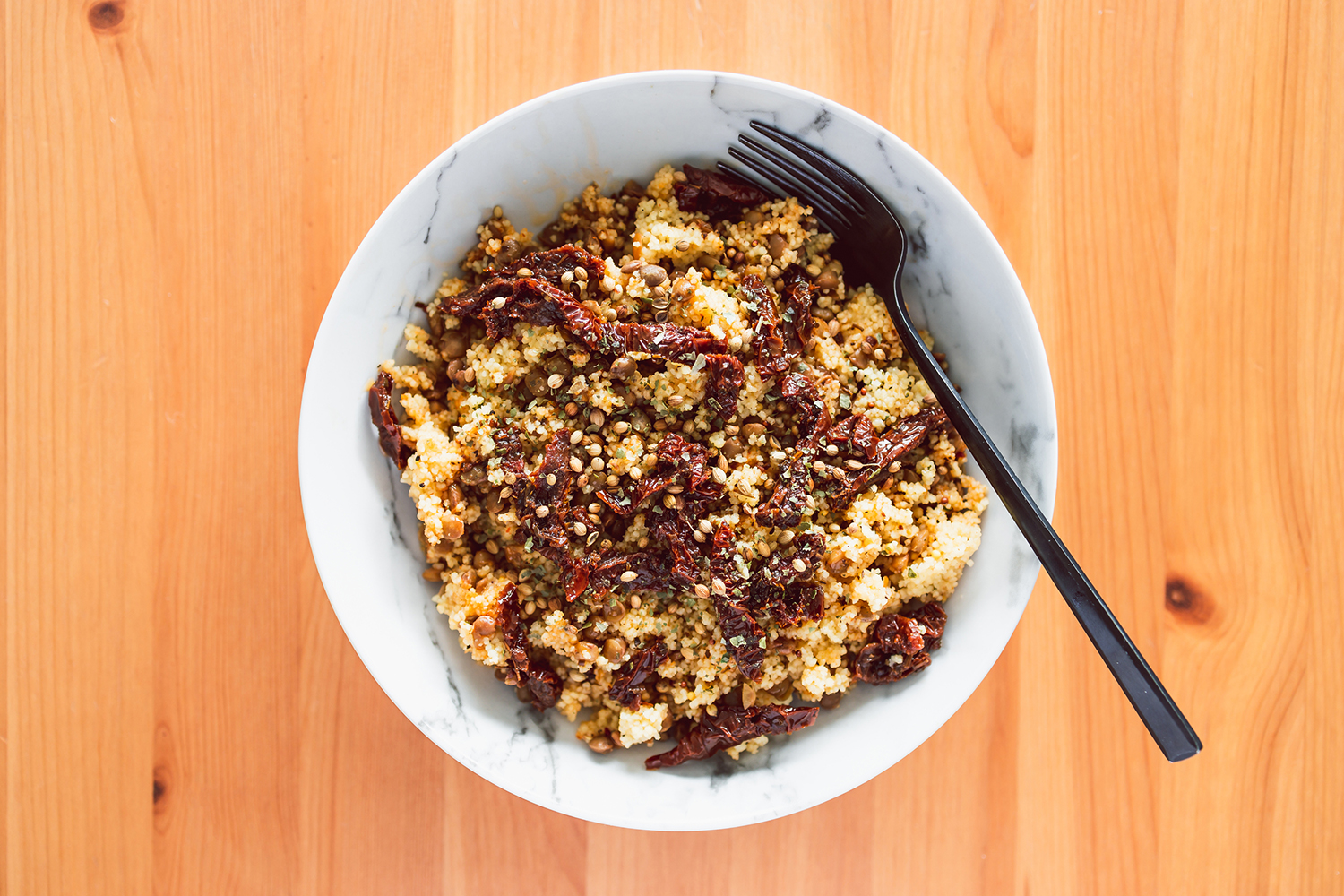
Couscous Salad with Black Lentils

By The Taste for Life Test Kitchen
Prep Time
45 minutes
Number of Servings
Serves 4
Ingredients
  • 12 cup dried black lentils
  • 5 cups water
  • 34 cup uncooked couscous
  • 34 tsp salt
  • 1 cup cherry tomatoes, quartered
  • 13 cup finely chopped red onion
  • 13 cup finely chopped cucumber
  • 14 cup chopped fresh parsley
  • 3 Tbsp chopped fresh mint
  • 3 Tbsp fresh lemon juice
  • 2 Tbsp extra-virgin olive oil
Directions
  1. Rinse lentils with cold water; drain.
  2. Place lentils and 4 cups water in a large saucepan; bring to a boil.
  3. Reduce heat, and simmer 20 minutes or until tender. Drain and rinse with cold water; drain.
  4. Bring remaining 1 cup water to a boil in a medium saucepan; gradually stir in couscous and 14 tsp salt.
  5. Remove from heat; cover and let stand 5 minutes.
  6. Fluff with a fork.
  7. Combine lentils, couscous, remaining 12 tsp salt, tomatoes, and remaining ingredients in a large bowl.
Nutrition Info
286 Calories, 11 g Protein, 0 mg Cholesterol, 45 g Carbohydrates, 2 g Total sugars (0 g Added sugars), 5 g Fiber, 7 g Total fat (1 g sat), 330 mg Sodium, ★★★★★ Vitamin K, ★★★ Folate, ★★ Vitamin B1 (thiamine), Phosphorus, Vitamin A, Vitamin B3 (niacin), Vitamin B6, Vitamin C, Iron, Zinc
Contributor

The Taste for Life Test Kitchen

The Taste for Life staffers have a wide variety of backgrounds and dietary needs. We're always experimenting in the kitchen, and love to share what we cook—and what we learn in the process.

Don't Miss a Thing!


Get the latest articles, recipes, and more, when you sign up for the tasteforlife.com newsletter.

Hot Product