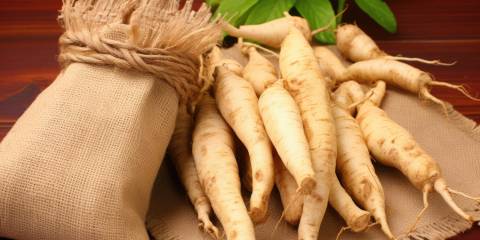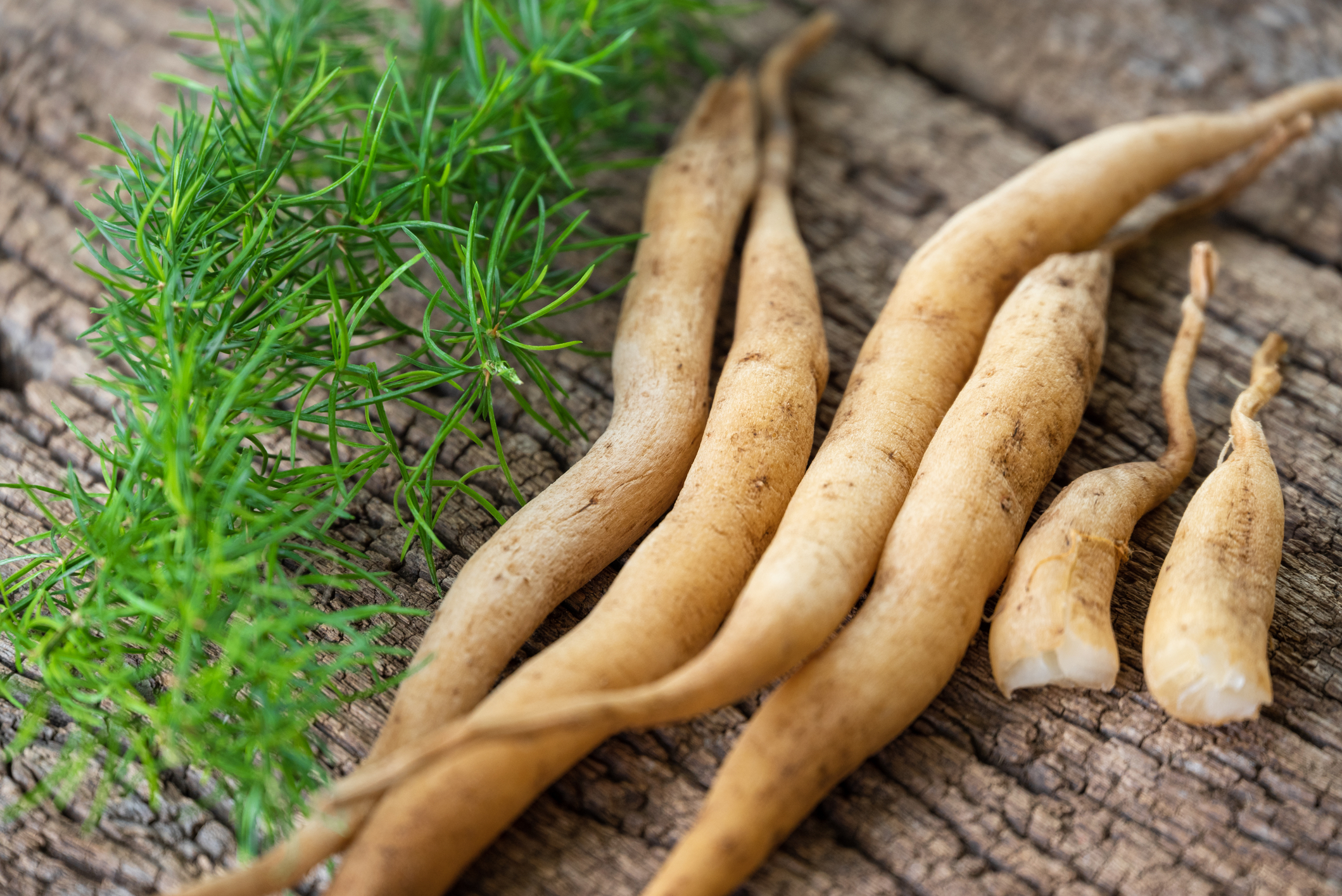
Are hormone wobbles, menopause symptoms, stress, or insomnia bogging you down? You may find shatavari, the ancient “Queen of Herbs” from India and South Asia, a fantastic ally.
Revered for millennia in its homelands, shatavari has recently become more popular in the West, with several new studies supporting its traditional benefits. “Shat” means 100 while “vri” means root or husband, often translated to “100 roots” (for its multirooted appearance) or “she who possesses 100 husbands” (for its long-held tradition for reproductive, hormone, and sexual vitality).
What Is Shatavari?
This is the medicinal root of Asparagus racemosa, different from but related to the asparagus we eat as a vegetable. It has nourishing, moistening, adaptogenic, yin tonic, nervine, and anti-inflammatory properties with a particular affinity for the reproductive, urinary, digestive, and nervous-adrenal systems, particularly as a supportive herb for estrogen-associated health markers.
Traditional Benefits of Shatavari
Shatavari is revered in the Ayurvedic healing tradition as a tonic for reproductive hormone vitality through the various phases of life: sexual vitality; fertility and milk production; mood, strength, and resilience; and better vitality throughout the aging and menopause processes.
Active Compounds
Shatavari contains various constituents that likely contribute to its many health benefits.
Shatavarins fall within the class of steroidal saponins, constituents common in adaptogenic and reproductive tonic herbs. Shatavarins are linked with this herb’s benefits for stress reduction and resilience; balanced mood, sleep, and energy; brain health; and both reproductive and adrenal hormone balance.
Isoflavones in shatavari provide phytoestrogenic actions that support estrogen and estrogen-associated health benefits, reproductive hormone balance, and vitality from menarche through menopause.
Mucilage gives shatavari a slippery, soothing, moistening “juicy” energy, particularly for mucosal membranes including cervical fluid and in the digestive and urinary tracts, particularly helpful alongside the phytoestrogenic benefits.
Evidence-Based Benefits
While science on shatavari has been historically limited, a surge of recent studies has confirmed its traditional benefits and increased awareness and popularity here in the United States.
Menopause, Hot Flashes, Sleep, Stress, Fatigue: Several studies of peri- and post-menopausal participants have shown shatavari extract to dramatically improve sleep quality (by 60 to 90 percent), reduce hot flashes (by 85 to 90 percent), reduce overall menopause symptoms (about 70 percent), and decrease fatigue, anxiety, and stress.
Estrogen: Subtle improvements in estradiol estrogen and follicle stimulating hormone levels in perimenopausal participants.
Sexual Vitality: Studies have also confirmed reduction of vaginal dryness and improved sexual function and pleasure.
Strength: Preliminary studies suggest slight improvements in muscle strength and bone health in older women, though longer studies are needed.
Nursing and Milk Production: Shatavari’s long-held reputation as a galactagogue has also been confirmed. In one study this resulted in approximately 15 milliliters more milk and eight fewer hours to breast fullness than in the placebo group.
At this time, much of the research on shatavari is influenced by, funded by, and/or conducted on specific brands of specialty shatavari extracts. While these study results do mirror traditional reputation and my own clinical experience, more independent research conducted on the crude roots is needed.
Dosages and How to Take
Shatavari root is taken in a few different formats. Standardized extracts may be more potent and can be taken in lower doses; though crude root medicines are traditional. Opt to take it at a convenient time of day, such as with breakfast.
Standardized root extracts in pill form: 300–600 milligrams (mg)/day
Crude pills or powder: 500–1,000 mg/day
or up to ¼ to ½ teaspoon once or twice a day (½ teaspoon = about 1,000 mg)
Tea: gently simmer ¼ to ½ teaspoon powder or ½ to 1 teaspoon cut/sifted root in 8–16 ounces of water, hot milk, ghee, or broth for 10–20 minutes or let infuse (steep) overnight solo or in blends
While some people notice a difference with shatavari quickly, most see the impacts slowly and subtly build up over two months and with consistent and continued consumption to maintain the benefits, feeling it with a more even-keeled mood, less fatigue without overstimulation, better sleep, improved sexual function and libido, increased stress resilience, and fewer hot flashes and night sweats.
It is often taken solo or combined with other hormone-balancing or adaptogenic herbs. Several studies support its benefits alongside ashwagandha for added stress, mood, energy, strength, and libido support.
In my clinic, I often pair it with pumpkin seed oil extract pills for estrogen and bladder benefits, especially for menopause, and for support for hot flashes, sleep, stress, and urinary frequency or incontinence.
Safety/Side Effects
Shatavari is generally well tolerated with few or no side effects. In large quantities, it may aggravate gas and bloating due to its fibrous mucilage properties; however, this is extremely rare in the dose ranges recommended.
One study in people with polycystic ovarian syndrome (PCOS) noted increased endometrial thickness after 12 weeks of use versus baseline and placebo; however, it’s unclear at this time if this was problematic or a sign of enhanced endometrial quality and function.