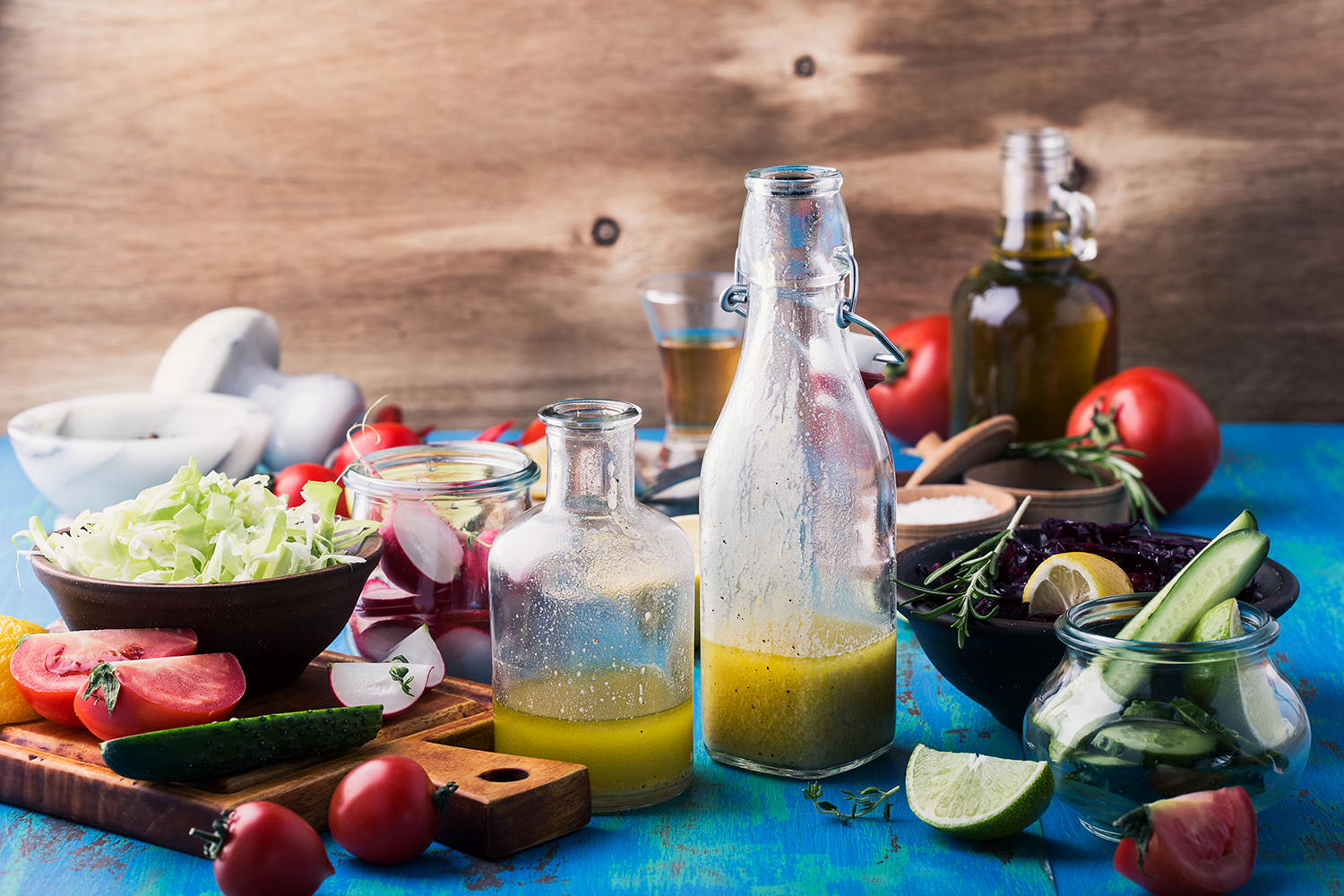
Simple to make, a homemade dressing comes together about as quickly as it takes to get a bottled one from the cabinet.
The simplest salad dressing to make is the oil-and-vinegar blend known as vinaigrette. When selecting the oil for homemade vinaigrette, choose extra virgin for the most flavor and health benefits. Olive oils labeled “pure,” “light,” and “extra light” have been refined and have less aroma and flavor than extra-virgin varieties.
For something different, experiment with:
- Walnut oil: rich and nutty; excellent with roasted squash and other fall vegetables like pumpkin and sweet potato
- Macadamia oil: mild, buttery, and subtly nutty
- Hazelnut oil: intensely nutty and good with roasted veggies
- Sesame oil: highly aromatic and ideal for Asian-inspired recipes
Tip: Nut oils go rancid more quickly than other types of oils. Refrigerate after opening.
Choosing Your Vinegar
For a punch of flavor and some bright acidity, pair oil with vinegar when making a vinaigrette. Varieties that work well include balsamic vinegar, apple cider vinegar, sherry vinegar, white or red wine vinegar, and rice vinegar.
Use red wine vinegar in bolder salads, and white wine vinegar in more subtle salads. To add a fruity taste, try apple cider vinegar. It goes well in salads that feature fruit, both dried and fresh.
Rice vinegar is made from fermented rice. It's available in unseasoned and seasoned varieties. This pick pairs well with Asian noodle salads.
For a sweeter vinaigrette, use Spanish sherry vinegar made from sherry wine. It tastes like a mix between apple cider vinegar and balsamic vinegar.
Overdressing a salad will drown out the flavors of the other ingredients. Pour on about half as much dressing as you think you need, and then toss the salad. Add more dressing if necessary.
The Basic Vinaigrette Formula
Once you’ve selected an oil and vinegar combination:
- Whisk the oil and vinegar together in a 3-parts oil to 1-part vinegar ratio.
- Season with salt and pepper, and taste.
- Add more vinegar and/or oil to your liking.
Branching Out
-
Consider a Sweetener
To balance out the sweet and sour in a vinaigrette, you may need to add a small amount of sweetener. Natural sweeteners work well, and they add their own intriguing flavors. Maple syrup, honey, and agave syrup are good choices to balance vinegar’s acidity. Use sweeteners sparingly in homemade dressings.
Remember, slices of fresh fruit and chopped dried fruit also contribute sweetness when added to a salad.
-
Try Using Mustard
A dollop of mustard whisked into a vinaigrette helps emulsify the dressing and adds a punch of flavor. Consider whole-grain, Dijon, American, and honey mustard varieties. Start with a teaspoon or two. Taste and add more as needed.
-
Add Herbs for Color and Flavor
Fresh herbs add bright pops of color to vinaigrettes. Try dill, tarragon, basil, flat-leaf parsley, mint, or cilantro.
Mince the fresh herb finely and whisk it in, or blend it into the vinaigrette using a high-speed blender or food processor for a creamier dressing.
For additional flavor, add grated lemon, lime, or orange zest. Minced garlic and shallots also make excellent additions to vinaigrettes.
-
Think Ahead: Make Extra
When making a vinaigrette, double the amount needed so there’s always extra ready in the fridge.
Storage
Keep leftovers in a glass jar stored in the refrigerator. For convenience, use a lidded screw-top jar so the vinaigrette can be shaken directly in the jar before adding to the salad.
If your dressing contains fresh garlic, Clostridium botulinum can grow. It's important to keep such a dressing refrigerated and use it promptly. Limit refrigerated garlic-and-oil mixtures to a few days only.
If the vinaigrette’s oil solidifies upon refrigeration, let the dressing come to room temperature before use. Or, to speed things up, place the covered jar in some hot water to help melt the oil.